
Drone Window Cleaning vs Traditional Methods: A Comprehensive Cost-Benefit Analysis
The Economics of Building Facade Maintenance: A New Paradigm
For decades, building owners and facility managers have accepted traditional window cleaning as a necessary but expensive operational cost. The annual expenditure on facade maintenance for a typical 20-story commercial building can range from $25,000 to $100,000, depending on location, building design, and cleaning frequency. This comprehensive analysis examines how drone-based cleaning technology fundamentally reshapes this economic equation.
Understanding the true cost comparison between drone and traditional methods requires looking beyond simple hourly rates to examine the complete operational picture—including hidden costs that rarely appear in initial quotes but significantly impact total cost of ownership.
Understanding Traditional Window Cleaning Costs
Labor: The Dominant Cost Driver
Traditional high-rise window cleaning typically requires a crew of 2-4 specialized technicians. In major metropolitan areas, certified rope access technicians command rates of $35-$75 per hour, while bosun chair operators and swing-stage workers earn similar wages. For a typical 20-story building facade, a traditional cleaning session requires 3-5 full working days with a 3-person crew.
Direct Labor Cost Calculation
This doesn't include supervision, ground crew for safety spotting, or the project manager coordinating with building management.
Equipment Rental and Setup
Swing stages, bosun chairs, and rope descent systems require significant setup time—often 4-8 hours before cleaning even begins. Equipment rental costs typically add $500-$2,000 per cleaning session depending on building height and access complexity. For buildings requiring scaffolding or building maintenance units (BMUs), costs escalate dramatically, sometimes reaching $10,000-$25,000 for multi-day rentals.
$500 - $2,000
per cleaning session
$10k - $25k
for BMU/scaffolding
Plus anchor point certification and fall protection inspections add ongoing compliance costs.
Insurance and Liability Premiums
Working at height is classified as high-hazard work by insurance underwriters. Traditional window cleaning contractors typically carry general liability policies of $2-5 million and workers' compensation coverage with experience modification rates that reflect the inherent danger of the work. These costs are embedded in contractor pricing, often representing 15-25% of quoted rates.
15-25%
of quoted rates
$2-5M
liability policies required
Building owners face additional liability exposure for tenant disruption and pedestrian safety concerns.
The Drone Cleaning Cost Structure
Initial Capital Investment
A professional drone cleaning system like WINDOSMART represents a significant upfront investment for a complete turnkey system including the drone platform, cleaning payload, ground-based pump systems, training, and initial spare parts inventory. While this capital outlay exceeds the cost of traditional equipment, the investment economics become compelling when analyzed over operational lifetime.
Dramatic Labor Reduction
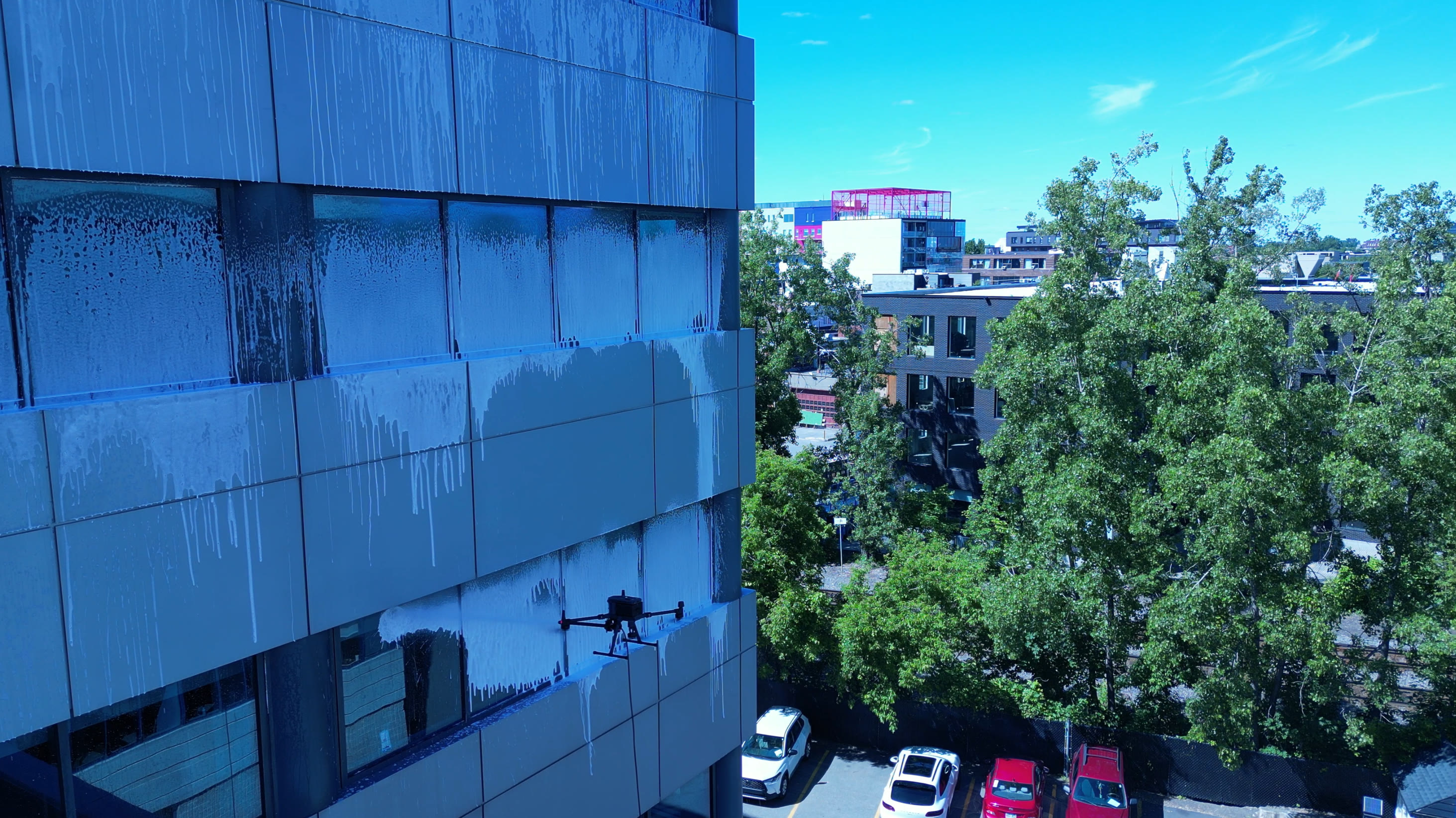
The most significant cost advantage of drone cleaning comes from labor efficiency. A single trained operator can manage complete drone cleaning operations, replacing the 2-4 person crews required for traditional methods. For the same 20-story building that required 4 days with traditional methods, drone cleaning typically completes the work in 1-2 days with one operator.
Drone Labor Cost Calculation
vs Traditional
$4,800
You Save
$4,200
Reduction
87.5%
Elimination of Heavy Equipment Rental
Drone operations require no swing stages, scaffolding, or BMU access. The ground-based pump system and drone itself constitute the complete equipment package. This eliminates equipment rental costs entirely and removes the setup/teardown time that adds non-productive hours to traditional projects.
Reduced Insurance Exposure
With no workers at height, the risk profile fundamentally changes. Drone operators work from ground level, eliminating fall hazards entirely. While drone operations carry their own insurance requirements (aviation liability, property damage coverage), the premiums are typically 40-60% lower than traditional high-hazard work coverage.
Direct Cost Comparison: A Real-World Example
Scenario: 20-Story Office Tower, Quarterly Cleaning
Traditional Method
Annual Cost
Drone Method
Annual Cost
Annual Savings
$27,825
Time Efficiency: The Hidden Multiplier
Faster Job Completion
Beyond direct cost savings, drone cleaning dramatically improves operational velocity. Buildings that previously required week-long cleaning campaigns can be serviced in 1-2 days. This speed advantage creates multiple downstream benefits:
Reduced Building Disruption: Shorter cleaning windows mean less impact on tenant operations, parking access, and pedestrian traffic around the building.
Increased Scheduling Flexibility: The ability to complete jobs quickly allows cleaning to be scheduled during optimal windows—early mornings, evenings, or weekends—minimizing interference with building operations.
Higher Throughput for Cleaning Companies: Service providers can complete more jobs per month, increasing revenue potential without proportionally increasing labor costs.
Emergency Response Capability
When buildings need rapid cleaning due to special events, lease turnovers, or unexpected contamination (bird droppings, pollution deposits, construction dust), drone systems can mobilize and complete work within 24-48 hours rather than the week-plus lead time often required for traditional methods.
Quality and Consistency Advantages
Precision Application
Drone cleaning systems deliver water and cleaning solutions through calibrated nozzles at consistent pressure and distance from the facade. This precision eliminates the variability inherent in manual methods, where individual technician technique, fatigue, and access limitations create inconsistent results.
The high-pressure spray pattern ensures thorough coverage without the streaking that often results from squeegee-based manual methods. For buildings with complex architectural features, recessed windows, or difficult-to-reach areas, drones can access and clean surfaces that traditional methods often miss or inadequately address.
Repeatability and Documentation
Drone systems can record flight paths and cleaning patterns, creating documentation of the work performed. This repeatability ensures consistent results across multiple cleaning sessions and provides verification of completed work for building owners and property managers.
Reduced Rework Requirements
The combination of precision application and thorough coverage significantly reduces callback rates and rework requirements. Industry data suggests traditional window cleaning generates 10-15% callback rates for missed spots or unsatisfactory results, while drone cleaning typically achieves callback rates below 3%.
Hidden Savings and Secondary Benefits
Simplified Permitting and Compliance
Traditional high-rise window cleaning often requires permits for street closures, sidewalk barricades, and equipment staging. These permits involve fees, application processing time, and coordination with municipal authorities. Drone operations typically require simpler permitting (primarily related to airspace and flight authorization) with lower associated costs and administrative burden.
Reduced Liability Exposure
Beyond insurance premium savings, drone operations eliminate several categories of liability risk:
- No risk of equipment drops from height
- No pedestrian exclusion zones around the building base
- No building anchor point liability
- Reduced tenant disruption claims
Extended Facade Life
Consistent, regular cleaning with appropriate pressure and solutions extends the service life of facade materials. Traditional cleaning schedules often stretch intervals to minimize costs, allowing contaminant buildup that can degrade facade materials over time. The cost efficiency of drone cleaning enables more frequent maintenance schedules without budget increases.
When Does Each Method Excel?
Drone Cleaning Advantages
Drone technology delivers maximum value in specific scenarios:
Tall Buildings (10+ stories): The labor and equipment savings scale dramatically with building height.
Complex Facades: Buildings with architectural features, setbacks, and irregular surfaces benefit from drone maneuverability.
Regular Maintenance Contracts: Repeat work on the same buildings maximizes the efficiency gains from established procedures and flight paths.
Time-Sensitive Situations: When rapid turnaround is required, drone operations deliver unmatched speed.
Traditional Method Advantages
Some scenarios may still favor traditional approaches:
Interior Glass: Drones are exterior-only; interior window surfaces still require manual cleaning.
Very Low Buildings (1-3 stories): For simple low-rise structures, the mobilization overhead of drone systems may not justify the investment.
Specialty Restoration Work: Historic building restoration or specialty glass treatment may require hands-on techniques.
📊Key Takeaways
76%
Cost Reduction
87%
Less Labor
60%
Faster Service
0
Workers at Height
Traditional method costs $36,500/year vs $8,675/year with drones
1 operator replaces a team of 3 technicians
Zero fall risk eliminates major liability exposure
Ideal for buildings 4+ stories with regular cleaning needs
Conclusion: The Investment Decision
The cost-benefit analysis strongly favors drone cleaning technology for commercial building maintenance. Annual savings of 40-60% compared to traditional methods, combined with improved quality, faster turnaround, and reduced liability exposure, create a compelling business case.
For building owners and property managers, the question is no longer whether drone cleaning makes economic sense—the data clearly shows it does. The question is how quickly to transition and capture these savings.
For cleaning service providers, the decision has strategic implications. Early adopters gain competitive advantages through lower costs, faster service, and enhanced safety records. Those who delay the transition risk losing market share to competitors who can offer better pricing and superior service levels.
The future of facade maintenance is here, and the economics are unambiguous: drone cleaning delivers superior results at lower cost.
Ready to transform your building maintenance?
Discover how WINDOSMART drone cleaning systems can reduce costs, improve safety, and deliver superior results for your operations.
Request a quote