
Environmental Benefits of Drone-Based Facade Cleaning: A Sustainability Perspective
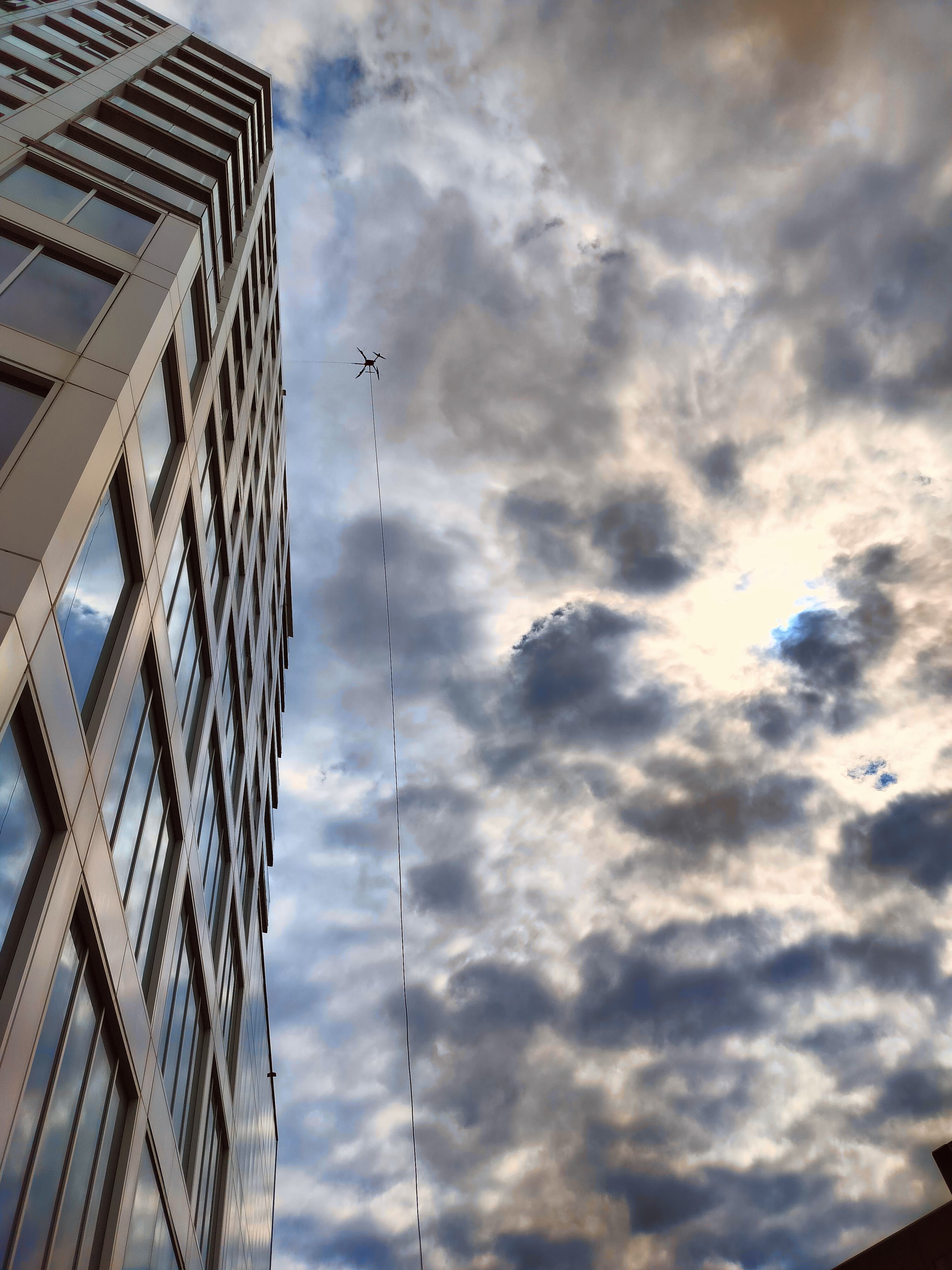
Sustainable Building Maintenance: The Environmental Case for Drone Cleaning
As global attention focuses increasingly on environmental sustainability, every industry faces pressure to reduce its ecological footprint. Building maintenance—a sector that consumes significant water, chemicals, and energy—is no exception. Traditional facade cleaning methods, while effective, carry substantial environmental costs that are often overlooked in operational planning.
Drone-based cleaning technology offers a compelling environmental alternative. Beyond the operational and safety advantages, these systems deliver measurable reductions in water consumption, chemical usage, carbon emissions, and urban noise pollution. This comprehensive analysis examines the environmental benefits of drone cleaning and provides the data needed to incorporate sustainability considerations into building maintenance decisions.
The Environmental Footprint of Traditional Facade Cleaning
Water Consumption Challenges
Traditional window cleaning and facade maintenance methods are notoriously water-intensive. Understanding the baseline consumption helps quantify the improvement potential that drone technology offers.
Conventional Squeegee Methods:
Manual window cleaning using squeegees and buckets requires approximately 2-4 liters of water per square meter of glass surface. For a typical 20-story office building with 8,000 square meters of facade, this translates to 16,000-32,000 liters per cleaning session.
Much of this water ends up as runoff, carrying dissolved dirt, cleaning chemicals, and residues into storm drains and eventually into local waterways. In water-stressed regions, this consumption represents a significant sustainability concern.
Pressure Washing Systems:
Traditional pressure washing, often used for non-glass facade elements, consumes substantially more water. Standard commercial pressure washers operate at 15-25 liters per minute. A 4-hour cleaning session can consume 3,600-6,000 liters—and that's for relatively small surface areas.
The high flow rates are necessary because traditional systems lack precision application. Water is sprayed broadly to ensure coverage, with much of it missing the target surface entirely or running off before it can contribute to cleaning action.
Water Treatment and Supply Costs:
Beyond raw consumption, traditional cleaning often requires treated municipal water, representing additional environmental processing. The energy embedded in water treatment and distribution adds to the overall environmental footprint.
Chemical Usage and Runoff
Cleaning Agent Requirements:
Traditional facade cleaning relies heavily on chemical cleaning agents to break down stubborn deposits. Common formulations include:
- Ammonia-based glass cleaners
- Alkaline degreasers for oil and grease
- Acidic cleaners for mineral deposits and hard water stains
- Surfactants and wetting agents
- Anti-streak additives and drying agents
While individually these chemicals may meet environmental standards, their cumulative use across thousands of buildings creates significant environmental loading. Urban stormwater systems regularly show elevated levels of cleaning product residues.
Bioaccumulation Concerns:
Some cleaning chemicals, particularly older formulations, contain compounds that bioaccumulate in aquatic ecosystems. Even at low concentrations, repeated exposure from regular building cleaning cycles can create measurable environmental impacts.
Disposal and Containment:
Proper containment and disposal of cleaning wastewater adds cost and complexity to traditional operations. Many jurisdictions now require containment systems for facade cleaning operations, particularly those using chemical agents. Compliance with these requirements adds equipment, labor, and disposal costs.
Carbon Emissions from Traditional Methods
Equipment Operations:
Traditional high-rise window cleaning relies on diesel-powered equipment:
- Boom lifts and aerial work platforms: 10-20 liters diesel per hour of operation
- Diesel generators for pump systems: 5-15 liters per hour
- Vehicle transport for equipment and crews: Variable based on distance
A typical multi-day cleaning operation on a large building can consume 200-400 liters of diesel, producing 500-1,000 kg of CO2 emissions before any work begins.
Extended Operation Times:
Traditional methods' slower pace extends equipment operation time. What could be completed in 1-2 days with drone technology may require 5-7 days with traditional methods, multiplying fuel consumption and emissions proportionally.
Vehicle Trips:
Multi-day operations require repeated crew transportation, equipment shuttling, and supply runs. Each additional day on site generates transportation emissions that compound the environmental footprint.
How Drone Cleaning Reduces Environmental Impact
Precision Water Application
The fundamental advantage of drone cleaning lies in precision application. Unlike traditional methods that spray broadly and rely on volume to achieve coverage, drone systems deliver water exactly where it's needed.
Targeted Delivery:
Advanced nozzle systems and precise distance maintenance enable drone cleaning to apply water with surgical accuracy. The high-pressure spray pattern ensures that water contacts the facade surface and contributes to cleaning action rather than running off unused.
Quantified Savings:
Field measurements across multiple WINDOSMART deployments demonstrate water consumption reductions of 40-60% compared to traditional methods for equivalent cleaning results. For the same 20-story building example:
- Traditional method: 20,000 liters average
- Drone cleaning: 8,000-12,000 liters
- Savings: 8,000-12,000 liters per cleaning session
For buildings cleaned quarterly, annual water savings reach 32,000-48,000 liters—enough to supply a household for 6-12 months.
Consistent Application:
Human operators naturally vary in their application technique based on fatigue, attention, and access constraints. Drone systems maintain consistent application throughout the cleaning operation, preventing both under-application (requiring rework) and over-application (wasting water).
Reduced Chemical Requirements
Mechanical Cleaning Action:
High-pressure water delivery provides significant mechanical cleaning action that reduces reliance on chemical agents. The combination of optimal pressure, appropriate nozzle selection, and consistent standoff distance enables effective cleaning with reduced chemical concentrations.
Heated Water Capability:
WINDOSMART systems can deliver heated water, which dramatically improves cleaning effectiveness for organic deposits, oils, and temperature-sensitive contaminants. Hot water often eliminates the need for chemical degreasers entirely.
Biodegradable Formulations:
When cleaning agents are required, drone systems can use lower-concentration biodegradable formulations. The precise application ensures that these agents reach their target rather than dispersing into the environment.
Measured Reductions:
Operators report chemical usage reductions of 50-70% when transitioning from traditional to drone-based cleaning. For buildings previously requiring 40-60 liters of concentrated cleaning solution per session, drone cleaning typically requires 15-25 liters of reduced-concentration formulations.
Carbon Footprint Reduction
Elimination of Diesel Equipment:
Drone cleaning systems operate on electric power—both the drone platform and the ground-based pump systems. This eliminates the diesel consumption associated with traditional aerial access equipment.
Emissions Comparison:
For a typical high-rise cleaning operation:
- Traditional method (diesel equipment): 500-1,000 kg CO2
- Drone method (electric): 5-15 kg CO2 (from grid electricity for charging)
- Reduction: 97-99%
In regions with renewable energy grids, drone cleaning approaches carbon-neutral operation.
Compressed Timelines:
Faster job completion reduces overall energy consumption. A job completed in 2 days versus 6 days requires proportionally less energy for all supporting systems, communications, site management, and crew activities.
Reduced Transportation:
Single-operator drone systems eliminate the vehicle trips required for traditional multi-person crews. A 3-person crew traveling separately generates three times the commute emissions of a single drone operator.
Noise Pollution Reduction
Decibel Comparisons:
Noise pollution from building maintenance operations affects building occupants, neighbors, and urban wildlife. Traditional equipment creates substantial noise:
- Diesel boom lifts: 75-85 dB at operation
- Pressure washer pumps: 80-90 dB
- Generator systems: 70-80 dB
Drone cleaning systems operate at significantly lower noise levels:
- Drone flight: 65-75 dB at close range, rapidly diminishing with distance
- Electric pump systems: 55-65 dB
Urban Wildlife Considerations:
Reduced noise pollution benefits urban wildlife populations, particularly birds that may nest on or near building facades. The quieter operation and faster completion minimize disruption to nesting, feeding, and migration patterns.
Occupant Productivity:
Lower noise levels reduce disruption to building occupants. Studies suggest that workplace noise above 70 dB significantly impacts concentration and productivity. Drone cleaning's quieter profile minimizes these impacts.
Life Cycle Environmental Analysis
Equipment Manufacturing Impact
A complete environmental analysis must consider equipment manufacturing. Drone systems have a smaller manufacturing footprint than traditional access equipment:
Material Requirements:
- Drone cleaning system: 25-40 kg total weight
- Boom lift: 5,000-15,000 kg
- Swing stage system: 500-1,500 kg
The embedded carbon in manufacturing is proportional to material requirements. A drone system's manufacturing footprint is a small fraction of traditional equipment alternatives.
Equipment Lifespan:
Professional drone systems have expected operational lives of 3-5 years with proper maintenance. Traditional access equipment may last longer but requires significantly more maintenance, parts replacement, and associated manufacturing impacts.
Operational Efficiency Gains
Annual Impact Scaling:
Environmental benefits compound over operational lifetime. A drone system operating 200 days annually delivers:
- Water savings: 1,600,000-2,400,000 liters over 5-year lifespan
- Chemical reduction: 5,000-10,000 liters of cleaning agents avoided
- CO2 reduction: 500,000-1,000,000 kg emissions avoided
End-of-Life Considerations
Recyclability:
Drone components—primarily aluminum, carbon fiber, and electronics—have established recycling streams. Battery recycling programs recover lithium and other valuable materials for reuse.
Comparison to Traditional Equipment:
Heavy equipment disposal involves significant environmental processing. Hydraulic fluids, diesel residues, and complex mechanical assemblies require specialized handling that drone systems avoid.
Building a Sustainability Business Case
Environmental Reporting Requirements
Growing regulatory and voluntary reporting requirements make environmental performance increasingly important for building owners:
Mandatory Reporting:
Many jurisdictions now require buildings to report environmental metrics including water consumption, chemical usage, and contractor emissions. Drone cleaning provides documented reductions that support compliance.
Voluntary Standards:
Sustainability certifications like LEED, BREEAM, and WELL include operations and maintenance criteria. Drone cleaning's environmental profile supports credits in water efficiency, indoor environmental quality, and innovation categories.
Tenant and Stakeholder Expectations
Corporate Sustainability Commitments:
Major tenants increasingly require landlords to demonstrate environmental responsibility. Drone cleaning supports building owners' ability to meet tenant sustainability requirements and maintain premium tenant relationships.
ESG Investment Criteria:
Environmental, Social, and Governance (ESG) criteria influence real estate investment decisions. Properties with strong environmental operations attract favorable ESG ratings and associated capital advantages.
Quantifying Environmental Value
Carbon Offset Equivalencies:
Annual CO2 savings from drone cleaning a portfolio of 20 buildings equals:
- 10,000-20,000 kg CO2 avoided
- Equivalent to planting 500-1,000 trees
- Carbon offset value: $150-$500 at current market rates
Water Savings Monetization:
In water-stressed regions, water carries increasing economic value. At rates of $3-$10 per 1,000 liters, annual water savings translate to $100-$500 per building in direct cost avoidance.
Best Practices for Sustainable Drone Operations
Water Management
Optimal Pressure Settings:
Using the minimum effective pressure for each facade type conserves water while ensuring cleaning quality. Operators should calibrate pressure settings based on soil conditions rather than using maximum pressure by default.
Recycling Systems:
Ground-based filtration systems can capture and recycle cleaning water for multiple passes, reducing freshwater consumption by an additional 30-50%.
Rainwater Harvesting:
Forward-thinking operations integrate rainwater harvesting to supply cleaning operations. Building-collected rainwater eliminates the environmental footprint of municipal water entirely.
Chemical Selection
Biodegradable Products:
Selecting certified biodegradable cleaning agents ensures that any runoff breaks down rapidly without ecosystem impact. Look for certifications like EPA Safer Choice, EU Ecolabel, or equivalent standards.
Concentrated Formulations:
Using concentrated products reduces packaging waste and transportation emissions. On-site dilution to appropriate concentrations maximizes both performance and environmental benefit.
Hot Water Priority:
Prioritize heated water over chemical cleaning whenever possible. The energy cost of heating water is typically lower than the environmental impact of chemical production, use, and disposal.
Energy Optimization
Renewable Charging:
Charging batteries and powering pump systems from renewable energy sources maximizes carbon reduction. Many commercial buildings have rooftop solar or purchase renewable energy that can power cleaning operations.
Efficient Flight Planning:
Optimized flight paths minimize energy consumption per square meter cleaned. Avoiding unnecessary repositioning, maintaining steady flight speeds, and using gravity assists (descending passes) improve energy efficiency.
The Future of Sustainable Building Maintenance
Emerging Technologies
Solar-Powered Systems:
Next-generation drone cleaning systems may incorporate solar charging to extend operation without grid power. Solar-canopy charging stations could enable fully renewable cleaning operations.
Water Recovery Drones:
Research into water recovery systems could enable drones to collect runoff for recycling, approaching closed-loop water consumption.
AI-Optimized Operations:
Machine learning algorithms will optimize cleaning patterns to minimize water and energy use while maximizing cleaning effectiveness, adapting in real-time to soil conditions and weather.
Regulatory Trends
Environmental regulations will likely tighten, increasing the value of sustainable cleaning alternatives:
- Water use restrictions in drought-prone regions
- Chemical runoff regulations in urban environments
- Carbon pricing affecting fuel-intensive operations
- Building environmental performance standards
Organizations that adopt sustainable cleaning practices now will be well-positioned for future regulatory requirements.
Conclusion: Environmental Responsibility and Operational Excellence
Drone-based facade cleaning represents a rare convergence of environmental benefit and operational advantage. Unlike many sustainability initiatives that require trade-offs between environmental performance and business outcomes, drone cleaning delivers both simultaneously.
The environmental case is compelling: 40-60% water reduction, 50-70% chemical reduction, 97-99% carbon emission reduction, and significant noise pollution improvement. These benefits are measurable, reportable, and increasingly valuable in a business environment that prioritizes sustainability.
For building owners, property managers, and cleaning service providers, drone technology offers a clear path to environmental leadership without sacrificing operational efficiency. The technology is proven, the benefits are quantified, and the environmental imperative is clear.
The transition to sustainable building maintenance is not a future consideration—it's a present opportunity. Organizations that embrace drone cleaning technology today position themselves as environmental leaders while capturing the full range of operational and financial benefits.
Sustainability and profitability align in drone-based facade cleaning. The question is not whether to pursue this path, but how quickly to move forward.
Ready to transform your building maintenance?
Discover how WINDOSMART drone cleaning systems can reduce costs, improve safety, and deliver superior results for your operations.
Request a quote