
The Future of Building Maintenance: How Drone Technology is Revolutionizing Facade Cleaning
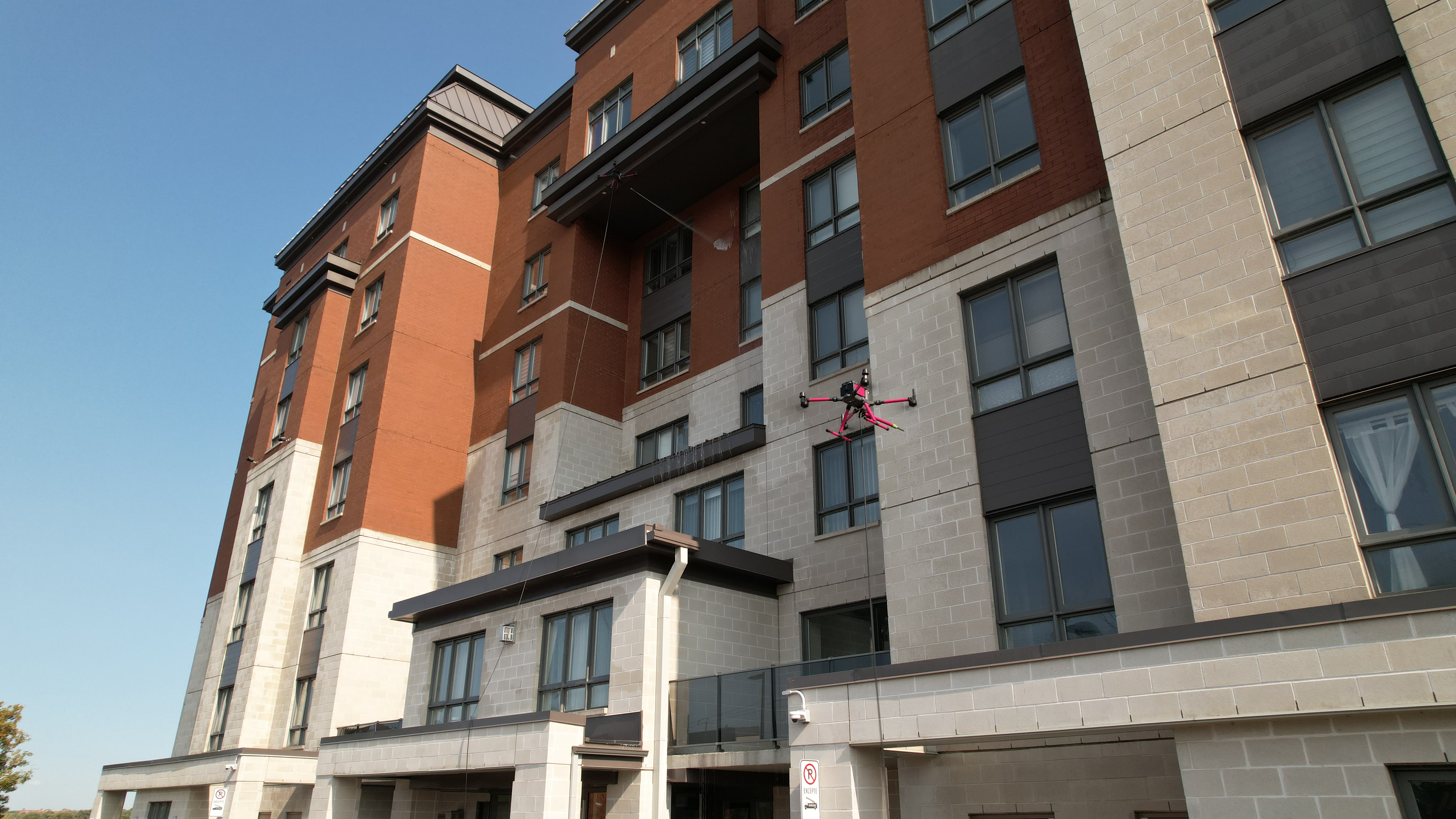
The Dawn of a New Era in Building Maintenance
Commercial building maintenance has remained largely unchanged for decades. Window washers suspended on scaffolding, rope access technicians, and hydraulic lifts have been the industry standard. However, the landscape is rapidly changing with the introduction of advanced drone cleaning technology.
The Problems with Traditional Building Maintenance
Traditional facade cleaning methods face several critical challenges:
Safety Concerns: Working at height remains one of the most dangerous occupations. According to OSHA, falls are the leading cause of death in the construction industry, accounting for over 30% of fatalities. Window washers face extreme risks daily, with accidents occurring despite stringent safety protocols.
High Operational Costs: Traditional window cleaning requires extensive equipment, multiple personnel, and significant insurance costs. A typical high-rise cleaning operation requires 2-3 technicians, specialized rigging equipment, and can cost upwards of $5,000-$15,000 per session depending on building height.
Weather Limitations: Traditional methods are severely restricted by weather conditions. Wind speeds above 15-20 mph typically halt operations, leading to scheduling delays and increased costs.
Time-Intensive Operations: Cleaning a 20-story building using traditional methods can take multiple days, causing disruption to building occupants and requiring extensive coordination.
How Drone Technology Solves These Challenges
Enhanced Safety
Drone cleaning systems eliminate the need for human workers to operate at dangerous heights. Operators control the system from the ground, removing the primary risk factor in facade maintenance. This represents a fundamental shift in workplace safety for the building maintenance industry.
Cost Efficiency
Modern drone cleaning systems like WINDOSMART reduce labor requirements from 2-3 personnel to a single operator. The automated pump control system allows one person to manage both flight operations and cleaning functions simultaneously, drastically reducing labor costs.
Superior Performance
Advanced stabilization systems allow drone cleaning operations in wind conditions up to 35 km/h—significantly higher than traditional methods. This extends the operational window and reduces weather-related delays.
Precision spraying technology ensures consistent coverage without streaks or missed spots, delivering superior cleaning results compared to manual methods.
Operational Speed
What takes days with traditional methods can be accomplished in hours with drone technology. Buildings that required multi-day cleaning sessions can now be serviced in a single day, minimizing disruption and maximizing efficiency.
The Technology Behind Modern Drone Cleaning Systems
Flight Stabilization
Advanced flight controllers use multiple sensors—GPS, barometric pressure sensors, and inertial measurement units—to maintain stable hover even in challenging conditions. This stability is crucial for maintaining consistent distance from the building facade.
Precision Water Delivery
Modern systems integrate ground-based high-pressure pumps with lightweight hoses that feed water to the drone payload. This design keeps the drone weight manageable while delivering industrial-grade cleaning power.
Cleaning solutions are mixed at the pump level and delivered through calibrated nozzles that ensure optimal coverage and pressure for different facade materials.
Smart Control Systems
Unified remote control systems allow operators to manage both flight operations and cleaning functions from a single controller. Automated pump control responds to operator inputs, eliminating the need for ground crew coordination.
Real-World Applications and Success Stories
Commercial Office Buildings
Office towers have been early adopters of drone cleaning technology. The ability to clean during off-hours without disrupting business operations has proven particularly valuable. Building managers report cost savings of 40-60% compared to traditional methods.
Residential High-Rises
Condominium and apartment buildings benefit from reduced resident disruption. Drone cleaning operations are quieter, faster, and don't require access to individual units for rigging equipment.
Industrial Facilities
Factories and warehouses with large facade areas see dramatic time savings. What previously required week-long cleaning campaigns can now be completed in days.
Environmental Benefits
Drone cleaning systems typically use less water than traditional methods due to precision application. The high-pressure spraying ensures effective cleaning with minimal waste.
Reduced chemical usage is another benefit—the mechanical action of high-pressure water often eliminates the need for harsh cleaning agents, making drone cleaning a more environmentally friendly option.
The Economics: ROI Analysis
Initial Investment
A complete WINDOSMART drone cleaning system represents a significant upfront investment. However, the economics become compelling when analyzed over time.
Operating Cost Savings
• Labor costs: 50-70% reduction due to single-operator efficiency
• Insurance costs: Lower premiums due to reduced at-height worker exposure
• Equipment maintenance: Simplified maintenance compared to traditional rigging systems
Revenue Opportunities
Cleaning companies that adopt drone technology can service more clients in less time, increasing revenue potential while maintaining competitive pricing.
Faster turnaround times enable same-day or next-day service offerings, creating premium service tiers that command higher prices.
Regulatory Landscape
Drone operations for commercial purposes are regulated by aviation authorities. In the United States, the FAA requires Part 107 certification for commercial drone operators. Similar regulations exist in most countries.
WINDOSMART provides comprehensive training and regulatory guidance to ensure operators achieve full compliance with local requirements.
Future Developments
AI-Assisted Operations
Next-generation systems will incorporate computer vision and machine learning to identify areas requiring additional cleaning attention, optimize flight paths, and detect potential facade damage during cleaning operations.
Autonomous Operations
Future systems may operate with minimal human intervention, using pre-programmed flight paths and automated cleaning sequences. This would further reduce labor requirements and enable 24/7 operations.
Integration with Building Management Systems
Building automation systems will eventually integrate facade cleaning scheduling, triggering automated cleaning when sensors detect dirt accumulation or scheduling regular maintenance based on weather forecasts and building occupancy patterns.
Conclusion
Drone technology represents a fundamental shift in how we approach building maintenance. The combination of enhanced safety, superior cost efficiency, operational speed, and environmental benefits makes this technology not just an alternative to traditional methods—it's the future of the industry.
For building owners, facility managers, and cleaning service providers, the question is no longer whether to adopt drone cleaning technology, but when. Early adopters are already realizing significant competitive advantages through reduced costs, improved safety records, and enhanced service offerings.
The future of building maintenance is here, and it's autonomous, efficient, and safer than ever before.
Ready to transform your building maintenance?
Discover how WINDOSMART drone cleaning systems can reduce costs, improve safety, and deliver superior results for your operations.
Request a quote