
Calculating ROI: When Does Investment in Drone Cleaning Technology Pay Off?
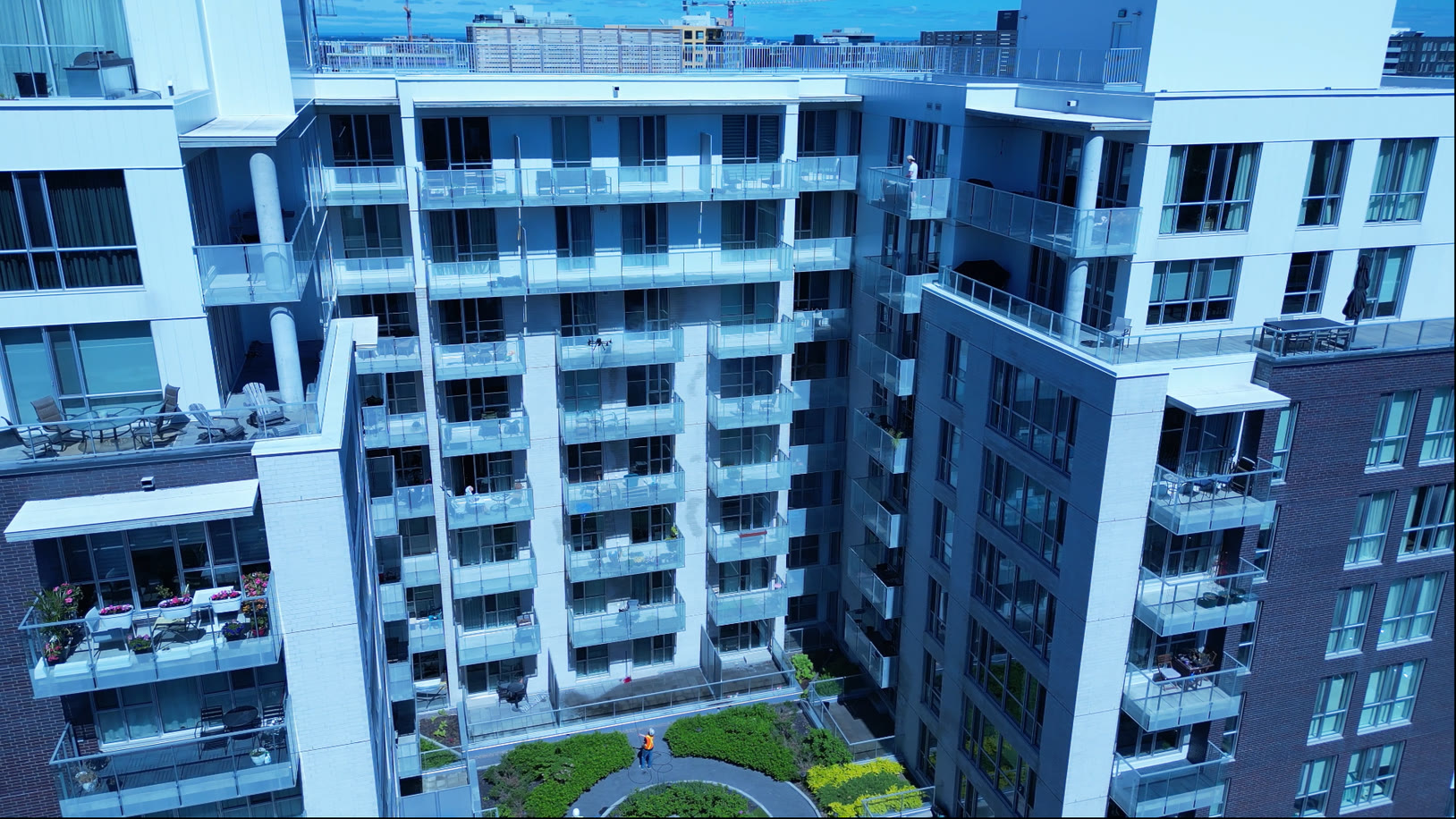
The Business Case for Drone Cleaning Technology: A Financial Deep Dive
Investing in drone cleaning technology represents a significant capital decision for building service contractors, facility management companies, and property owners considering in-house capabilities. Unlike incremental equipment purchases, this investment fundamentally transforms operational economics—but realizing the full financial benefits requires careful analysis and strategic implementation.
This comprehensive ROI analysis provides the framework and data points needed to build an accurate financial model for drone cleaning investment, identify the variables that most significantly impact returns, and develop strategies to accelerate payback and maximize long-term profitability.
Understanding the Investment Structure
Capital Expenditure Components
A complete professional drone cleaning system like WINDOSMART involves several capital cost categories:
Primary Equipment:
- Drone platform with cleaning payload: The core aircraft and specialized cleaning attachment represent the largest single cost, typically $15,000-$35,000 depending on capabilities and payload capacity.
- Ground-based pump system: High-pressure pumps, control systems, and water treatment equipment add $8,000-$20,000.
- Hose and delivery systems: Specialized lightweight hoses, reels, and fittings contribute $2,000-$5,000.
Support Equipment:
- Spare batteries and charging infrastructure: $2,000-$4,000 for adequate operational redundancy.
- Transport and staging equipment: Cases, vehicle modifications, and staging platforms add $1,500-$3,500.
- Maintenance tools and spare parts inventory: Initial parts inventory of $1,500-$3,000 ensures operational readiness.
Training and Certification:
- Operator certification: FAA Part 107 or equivalent certification costs including training and testing fees run $500-$1,500 per operator.
- Equipment-specific training: Manufacturer training programs for the specific cleaning system typically cost $2,000-$5,000.
- Ongoing recurrent training: Budget $500-$1,000 annually per operator for proficiency maintenance.
**Total Initial Investment Range: $35,000-$75,000** depending on system configuration, number of operators trained, and support equipment requirements.
Ongoing Operating Costs
Beyond initial capital, ongoing costs include:
Consumables:
- Cleaning solutions and chemicals: $50-$200 per job depending on facade size and soil conditions.
- Water costs: Typically minimal but varies by location and volume.
Maintenance:
- Scheduled maintenance: Manufacturer-recommended maintenance runs $2,000-$4,000 annually.
- Unscheduled repairs: Budget 3-5% of equipment value annually for unexpected repairs.
- Battery replacement: Flight batteries have limited cycle life; budget $1,000-$2,000 annually for replacement.
Insurance:
- Aviation liability: $1,500-$4,000 annually depending on coverage limits and claims history.
- Equipment coverage: Hull insurance runs 2-4% of equipment value annually.
Regulatory Compliance:
- Certification renewals: $100-$300 per operator biennially.
- Airspace authorization systems: Software subscriptions of $200-$500 annually.
Quantifying Cost Savings
Labor Cost Reduction
The most significant savings come from labor efficiency. Traditional high-rise window cleaning requires crews of 2-4 technicians; drone operations require a single trained operator.
Example Calculation:
Traditional approach for a 20-story building:
- Crew of 3 technicians × 8 hours × 4 days = 96 labor hours
- At $45/hour fully loaded cost = $4,320 labor per cleaning
Drone approach for the same building:
- 1 operator × 8 hours × 1.5 days = 12 labor hours
- At $55/hour fully loaded cost = $660 labor per cleaning
Labor savings per cleaning: $3,660 (85% reduction)
For a building cleaned quarterly, annual labor savings: $14,640
Equipment Rental Elimination
Traditional methods require rental of swing stages, scaffolding, or boom lifts for each job. Drone operations eliminate these costs entirely.
Typical rental costs eliminated:
- Swing stage rental: $800-$2,000 per cleaning session
- Boom lift rental: $500-$1,500 per day
- Scaffolding: $2,000-$5,000 for multi-day setups
For buildings requiring swing stages, annual rental savings of $3,200-$8,000 are typical for quarterly cleaning schedules.
Time-Based Savings
Faster job completion creates multiple financial benefits:
Reduced site costs:
- Fewer days of parking, permits, and site access fees
- Lower fuel and vehicle costs for shorter deployments
Increased capacity:
- Completing jobs faster enables more revenue-generating work per period
- A team that completes 4 jobs per week instead of 2 doubles potential revenue
Insurance Premium Reduction
Eliminating at-height workers dramatically improves risk profiles. Operators report workers' compensation premium reductions of 30-50% after transitioning to drone-primary operations.
Example savings:
- Traditional WC premium for 3 window technicians: $15,000-$25,000 annually
- Reduced premium for ground-based drone operations: $5,000-$10,000 annually
- Annual savings: $10,000-$15,000
Building the Payback Model
Simple Payback Calculation
The most basic payback analysis divides initial investment by annual net savings:
Example Scenario:
- Initial investment: $55,000
- Annual labor savings (10 buildings, quarterly cleaning): $146,400
- Annual equipment rental savings: $40,000
- Annual insurance savings: $12,000
- Less: Annual operating costs: ($15,000)
- Net annual savings: $183,400
Simple payback period: 3.6 months
Discounted Cash Flow Analysis
For more sophisticated analysis, discounted cash flow (DCF) methods account for the time value of money:
Five-Year NPV Example (10% discount rate):
Year 0: ($55,000) initial investment
Years 1-5: $183,400 annual savings → $138,000 present value per year
NPV: $638,000
IRR: >300%
Sensitivity Analysis: Critical Variables
ROI outcomes are sensitive to several key variables. Understanding which factors most impact returns helps focus management attention:
Utilization Rate (High Impact):
Equipment that sits idle generates no returns. Each week of low utilization extends payback.
- At 80% utilization: Payback in 4 months
- At 50% utilization: Payback in 6 months
- At 25% utilization: Payback in 12 months
Job Size Mix (Moderate Impact):
Larger jobs with higher traditional costs yield greater savings per deployment. A portfolio weighted toward small buildings dilutes ROI.
Weather Delays (Moderate Impact):
Geographic areas with high wind or precipitation may experience more weather-related delays, extending timelines and reducing effective utilization.
Operator Proficiency (Moderate Impact):
New operators require ramp-up time. Conservative estimates should assume 2-3 months of reduced productivity during initial deployment.
Competitive Pricing Pressure (Variable Impact):
As drone cleaning becomes more common, pricing pressure may compress margins. First-mover advantages should be captured quickly.
Strategies to Accelerate ROI
Maximizing Utilization
High utilization is the single most important factor in ROI optimization. Strategies include:
Contract Structure:
- Prioritize multi-building contracts that guarantee utilization
- Offer maintenance agreements with scheduled quarterly or semi-annual cleanings
- Bundle services across building portfolios
Geographic Optimization:
- Concentrate initial marketing in defined geographic areas to reduce transit time
- Schedule jobs to minimize travel between sites
- Develop relationships with property management companies with multiple properties
Weather Flexibility:
- Maintain flexible scheduling to capitalize on weather windows
- Develop contingency scheduling for weather-delayed work
- Consider operating in multiple climate zones to diversify weather risk
Premium Pricing Strategies
Drone cleaning's speed and safety advantages support premium pricing in many markets:
Rapid Response Services:
Emergency and rush cleaning commands premium rates—often 50-100% above standard pricing. Drone capabilities enable same-day or next-day service that traditional methods cannot match.
Safety-Premium Positioning:
Building owners increasingly face pressure to reduce contractor injuries on their properties. Positioning drone cleaning as the zero-fall-risk option supports premium pricing with safety-conscious clients.
Quality Differentiation:
Consistent, streak-free results from precision spraying justify quality-based premiums. Document results with before/after photography to support value claims.
Operational Efficiency
Standardized Procedures:
Develop site-specific flight plans and cleaning protocols for repeat customers. Standardization reduces setup time and ensures consistent results.
Preventive Maintenance:
Rigorous preventive maintenance minimizes costly downtime. Schedule maintenance during low-demand periods.
Cross-Training:
Train multiple operators to eliminate single-point-of-failure personnel dependencies.
Case Studies: Real-World ROI
Case Study 1: Regional Cleaning Contractor
Profile: 15-person commercial cleaning company serving a metropolitan area
Investment: $52,000 for WINDOSMART system plus training for 2 operators
Implementation: Phased transition over 6 months
Results at 18 months:
- Reduced window cleaning labor from 8 FTEs to 3 FTEs
- Increased annual window cleaning revenue by 45% through capacity expansion
- Workers' compensation premiums decreased 38%
- Initial investment recovered in 5 months
- Year 1 net profit improvement: $287,000
Case Study 2: Property Management Company
Profile: Property management firm with 12 high-rise office buildings
Investment: $68,000 for in-house drone cleaning capability
Implementation: Replaced outsourced cleaning services entirely
Results at 12 months:
- Eliminated $180,000 annual outsourced cleaning cost
- Improved cleaning frequency from semi-annual to quarterly
- Enhanced tenant satisfaction scores
- Initial investment recovered in 5 months
- Ongoing annual savings: $95,000 after operating costs
Case Study 3: Building Service Startup
Profile: New company launched specifically around drone cleaning technology
Investment: $75,000 including two complete systems
Implementation: Started operations with drone-first positioning
Results at 24 months:
- Built client portfolio of 45 buildings
- Achieved $480,000 annual revenue with 2 operators
- Gross margins exceeding 65%
- Payback achieved in 8 months
Long-Term Strategic Value
Market Position Advantages
Beyond direct financial returns, drone cleaning capability creates strategic advantages:
Competitive Differentiation:
As building owners become aware of drone cleaning benefits, companies with this capability win contracts over traditional-only competitors.
Client Retention:
The combination of better results, lower disruption, and improved safety creates switching costs that improve client retention.
Talent Acquisition:
Operators are attracted to technology-forward employers. Drone capabilities help attract and retain skilled workers in competitive labor markets.
Scalability
Once processes are established, scaling drone cleaning operations requires only incremental equipment and operator investment. The fixed costs of training, procedure development, and client relationship building are leveraged across expanding operations.
Conclusion: The Investment Decision
For organizations considering drone cleaning technology, the financial case is compelling. Payback periods of 4-12 months are typical, with returns on investment often exceeding 200% in the first year alone.
The key to maximizing returns lies in utilization. Organizations that deploy equipment consistently across a full client portfolio realize dramatically better returns than those who treat drone cleaning as an occasional capability.
As with any capital investment, accurate financial modeling using organization-specific data is essential. The framework presented here provides the structure; the specific numbers must reflect your market, operations, and growth plans.
For most commercial cleaning operators, property managers, and building service companies, the question is not whether drone cleaning technology pays off—it clearly does. The question is how quickly to deploy and how aggressively to pursue the market opportunity.
Ready to transform your building maintenance?
Discover how WINDOSMART drone cleaning systems can reduce costs, improve safety, and deliver superior results for your operations.
Request a quote